
An employee tells you someone they love has died by suicide. They need time away, but they’re not sure how much. They don’t know what to tell their coworkers. There’s a project due Friday.
What happens next?
For a business or nonprofit, being prepared means knowing how to respond to the person and handle the work – all with compassion which includes making sure that employee isn’t left arranging their own coverage while planning a funeral.
During Week Two of #DelawareGoesTealAndPurple, we’re focusing on Being Prepared. For employers, that includes preparing to support people after a suicide loss, or postvention.
You don’t need a large human resources department to begin. You need a clear process, practical options and a willingness to listen. Being prepared is postvention in action: supporting people after a suicide loss, reducing harm and making sure compassionate words are followed by practical help.
Here’s what that first phone call might sound like. (These are options, not a checklist. Follow their lead):
- “I’m so sorry. Thank you for letting me know.”
- “How are you?”
- “Can you think of anything you may need right now?”
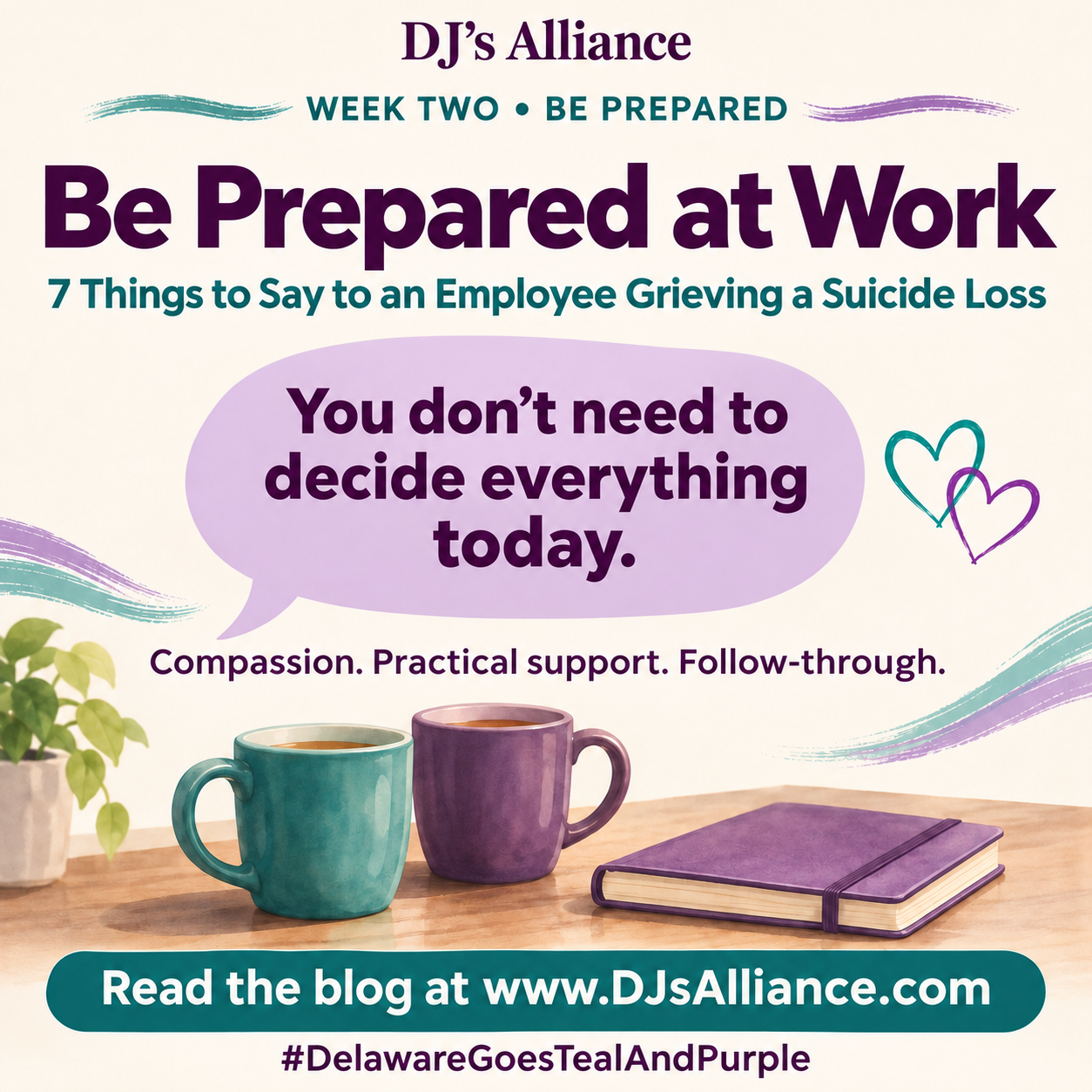
- Offer immediate days off: “You don’t need to decide everything today, just know that you have X amount of bereavement days and we can look into sick days and anything else you may need. I’ll handle immediate coverage, send you the available options and check in at a time we agree on.”
- “Who is helping you through this at home? With your permission, we can coordinate meals or other support with someone you choose. We would only discuss that support—not your employment information.”
- “Would you like me to let the team know you’ve experienced a loss? What would you feel comfortable having me share?”
- “My heart hurts for you. Just know that we’re here for you. We’ll check back in soon.”
Start with compassion.
“I’m so sorry. Thank you for letting me know.”
Keep in mind that you are likely one of their first calls. They may not even be calling you to tell you they need a few days and they’ll be back in on Tuesday – they may be calling you to alert you that a catastrophic event has just hit their household and they don’t know which end is up. Don’t add pressure to the situation, even though you may now have a lot of your own pressures on the backend as you begin to handle the situation for the company. Your employee may have very little capacity for added pressure in this moment.
Ask them a few questions.
But only a few! Ask them how they are doing and if they can think of anything they need right now. If your company, nonprofit or organization is in a place to support your employee with a meal train, gas cards, flowers, etc., you may also want to ask for the contact information of someone helping them at home – at DJ’s Alliance, we call these folks “Gatekeeper Friends.” You may want to start by asking, “Who is helping you through this at home? With your permission, we can coordinate meals or other support with someone you choose. We would only discuss that support—not your employment information.”
Give them room to answer without asking for details about the death. Avoid questions about warning signs, family relationships or why it happened. They shared a loss; they don’t owe you an explanation. These questions can feel invasive, suggest blame and add distress to an already painful situation. Your concern is for your employee and their current wellbeing.
The U.S. Department of Veterans Affairs’ National Center for PTSD identifies acknowledgment, listening and practical assistance as ways leaders can support grieving employees. These are things a supervisor can offer without having every answer. PTSD: National Center for PTSD
Offer a lot of support and written options
Someone navigating a recent loss may have difficulty taking in information. Explain immediately available leave and who their direct contact will be within the company right now (maybe that’s you, maybe that’s HR). Send a short, written summary they can revisit.
Do not promise flexibility you cannot provide. That said, remember that, if you are in fact one of your employee’s first calls after this loss, they may not be able to let you know which option they’d like to use in that first call or even how much bereavement/sick time they may need in the near future/right now. They may simply be calling to give you the courtesy of knowing that something big was happening. That may be all they can process for themselves in the moment. Don’t expect an answer right there on the phone. If your company has flexibility, try letting the employee know they can check back in or you’ll check back in with them in a day or three to see how things are going.
It’s a tough thing to navigate: Your employee deserves to know all of the relevant information available to them so they can make the best choices for them and their family, but they may not be able to process it right away. Having it in writing so they can review it when their mind is a little more clear is key. And, above all, they need space and support.
Ask what they want others to know.
Before sending a staff email, collecting donations or organizing a meal train, ask.
“Would you like me to let the team know you’ve experienced a loss? What would you feel comfortable having me share?”
Some people welcome coworkers’ support. Others want privacy. You can explain an absence or redistribute assignments without sharing the circumstances of someone’s death.
Revisit their preferences as needed. What feels comfortable today may change.
Make returning to work a conversation.
Coming back to work doesn’t mean grief has ended.
Some employees appreciate familiar routines. Others need temporary changes to their schedule, workload or responsibilities. Talk through what is realistic together when your employee is ready to discuss their return.
Try: “What feels manageable this week? Are there responsibilities we should make a temporary plan for?”
Agree on priorities and a time to check in again. The goal is to make expectations clear while giving the person room to tell you when something isn’t working.
Make support easier to find.
If you offer an employee assistance program, share the actual contact information and explain how to access it. A benefits portal link alone may leave someone searching through several pages when they have little energy to spare.
Where available, offer information about suicide loss peer support, grief groups and counseling. Let the employee decide what fits.
Keep showing up.
A brief, private check-in a few weeks later can matter: “How is the workload feeling? Is there anything we should revisit?”
Continue including the employee in everyday conversations and invitations. Follow their lead about discussing their person. Neither a difficult afternoon nor a good day tells you everything about how they’re doing.
For businesses and nonprofits, this is part of building a workplace where care has follow-through. Before the next loss, identify who will respond, review your leave and communication practices and make sure supervisors know where to find support.
Review those policies before someone needs them. Would an employee know where to start? Does your approach recognize that an important loss may involve a close friend, an unmarried partner or someone outside the policy’s definition of immediate family?
Those are useful questions for your leadership team to discuss now. Someone should not have to teach their employer how to help while carrying a new and unwanted grief.
Find resources through DJ’s Alliance and our #DelawareGoesTealAndPurple toolkit, available in English and Spanish.
Words matter. What you do next matters, too. 💜🩵
Leave a Reply